TALON SWORDS Out Of Iraq
Writing by Evan Ackerman on Friday, 11 of April , 2008 at 3:20 am

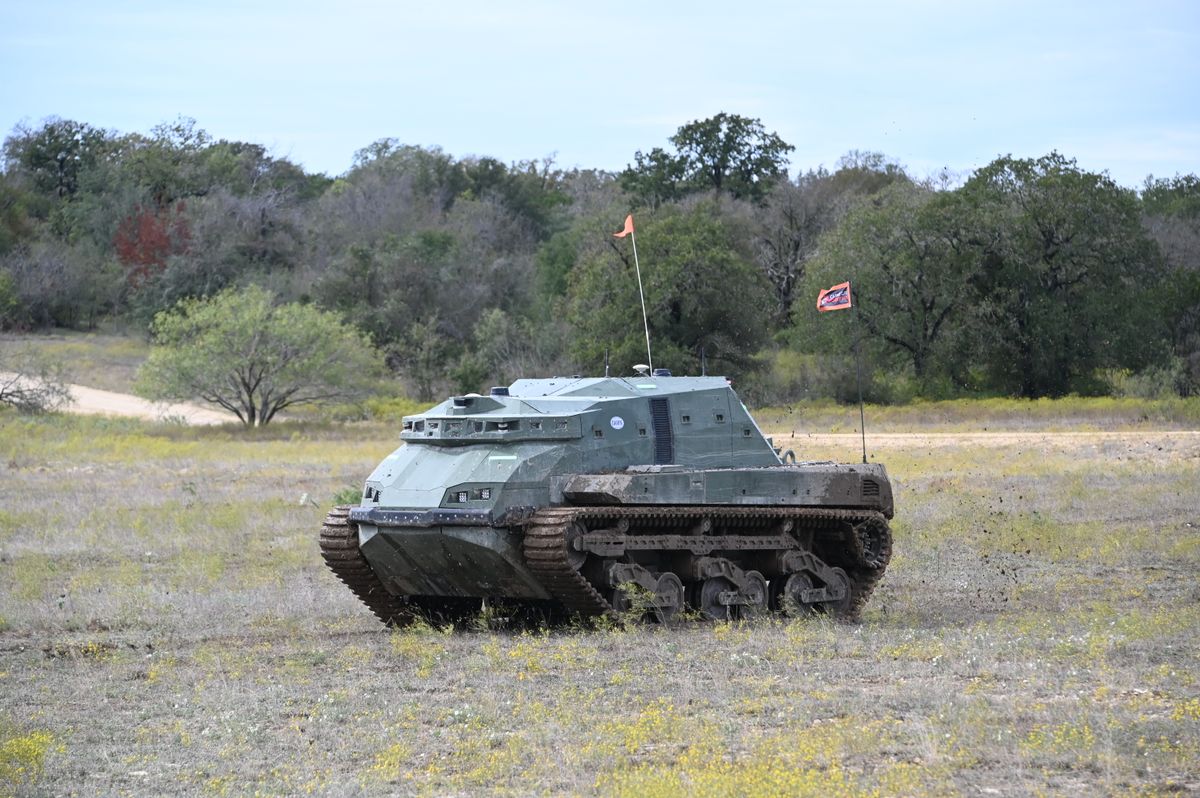
Last August, we wrote about the deployment of three TALON SWORDS armed robots into active service in Iraq. The bots, designed by Foster-Miller, can be armed with a variety of weaponry, and are remote controlled, not autonomous. Back in the August article, I commented that the SWORDS “also feature a kill switch, because sometimes the bots kinda go crazy.” I wasn’t just making a joke; Danger Room had reported that “the machines had a tendency to spin out of control from time to time.” Two months later in October of 2007, Foster Miller introduced a new version of SWORDS called MAARS, which included a bunch of new safety features designed specifically to prevent friendly fire incidents. It now seems as though these improvements came too late, as the SWORDS robots have been withdrawn, reports Popular Science:
[T]he Army’s Program Executive Officer for Ground Forces, Kevin Fahey, was asked what happened to SWORDS. After all, no specific reason for the 11th-hour withdrawal ever came from the military or its contractors at Foster-Miller. Fahey’s answer was vague, but he confirmed that the robots never opened fire when they weren’t supposed to. His understanding is that “the gun started moving when it was not intended to move.” In other words, the SWORDS swung around in the wrong direction, and the plug got pulled fast. No humans were hurt, but as Fahey pointed out, “once you’ve done something that’s really bad, it can take 10 or 20 years to try it again.”
It’s understandable that armed robots can be dangerous, even if they’re only semi-autonomous. I agree on principle with Fahey’s position; if a SWORDS robot were to injure or kill someone (for lack of a better phrase) by itself, it may very well take years (although maybe not 10 or 20) before armed robots that work in concert with humans are tried again. However, people make mistakes too. Equipment malfunctions. No matter how concerned you are with safety, wars are going to remain dangerous. But robots are replaceable, and the longer it takes to get them into service, the worse it’s going to be for humans on the battlefield.
[ Foster-Miller ] VIA [ Danger Room ]
Category: Military
- Add this post to
- Del.icio.us -
- Digg
Comment by Richard Millwood
Made Friday, 11 of April , 2008 at 2:18 pm
“the longer it takes to get them into service, the worse it’s going to be for humans on the battlefield”
I love this blog, but can’t let this pass without comment - which humans? Do we foresee wars between robots? To gain and control empty territory? In the end the robot owner’s intent is to control other humans and, if necessary, kill and maim them. Instead why not invent robots that get rid of landmines, destroy guns and increase wealth so that we don’t fight over scarce resources?
Comment by Evan Ackerman
Made Friday, 11 of April , 2008 at 4:28 pm
Point taken. I was speaking in generalities, and as far at the military is concerned, I feel like if you can use a robot to replace a human, you’re decreasing the potential cost of human life due to conflict irrespective of what side the robot is on.
There are, of course, many worthier roles that robots can be adapted for that would save MORE lives at the cost of none, such as removing land mines. The unfortunate fact is that robots able to deal with explosives and such are created or funded by the government, which has prioritized winning wars rather than helping people.
I would like to thing that a war between robots is never going to happen. I hope that by the time such a thing has become a technological possibility, we as a species have become advanced enough not to NEED wars. It’s probably wishful thinking, but I’m going to keep it up anyway.