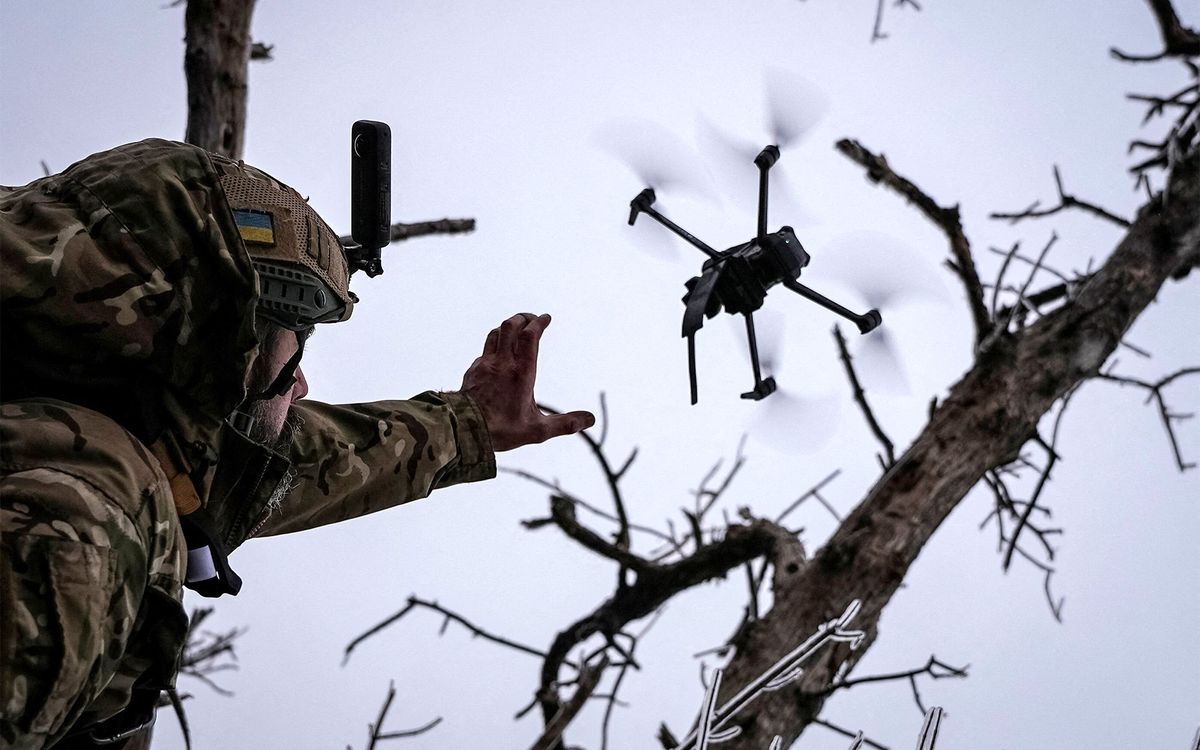
Air Force “Completes” Killer Micro Drone Project, Details Unsettlingly Vague
Writing by Evan Ackerman on Wednesday, 6 of January , 2010 at 3:12 am
According to military budget documents, “Project Anubis” has been successfully completed. All that we really know is that Project Anubis was begun in 2008 by the Air Force Research Lab with the goal of “develop[ing] a Micro-Air Vehicle (MAV) with innovative seeker/tracking sensor algorithms that can engage maneuvering high-value targets.” In this case, successful completion probably means one of two things: either the development was completed to the satisfaction of the original goal and then the project was simply considered finished, or the project actually produced something that may be fielded.
If no operational robot came from this project, it’s only a matter of time (a short time) until one is produced. There’s no reason why it’s a technological impossibility, and tactically, it would be extremely valuable, as it would (as Danger Room points out) solve both the positive target identification and collateral damage issues that come with Predators firing guided missiles.
VIA [ Danger Room ]
Comments (5)
Category: Military
- Add this post to
- Del.icio.us -
- Digg
Comment by bob
Made Wednesday, 6 of January , 2010 at 5:26 am
On the evidence, I suspect this is a bit too breathless – that reality, while still worth noting, is rather less than might be thought based on the reporting.
“Successfully completed” in the context of a government contract can be as simple as “the contractor filed all the required reports, we had a few meetings, and there were no negative contract/legal actions.”
In particular, the budget document says (as noted) that accomplishment (not the goal, as stated in the post) was development of a MAV with … algorithms that can engage maneuvering high-value targets. Nothing about any munition (though that might be a valid inference from “engage”).
I’d strongly suspect, from the amount and (admittedly brief) description that the contractor (Aerovironment? a university?) used the money to develop and demonstrate an ability to pick out a particular moving object (analogous to the ability of a modern point-and-shoot camera to identify faces in the field of view) and maintain it in the field of view by maneuvering – to include both orientation and pursuit as the target recedes. Might have even included turning on an LED or a laser pointer when some the target was in an engagement envelope. Good and useful work, but hardly “the ultimate assassination robot” as the lede in the Danger Room article suggests.
Operational utility is an entirely separate issue. What’s the operational concept; for example, is this a fully autonomous system, an assisted teleop (like Predators), etc.? How reliable is the target detection? The services (mostly Air Force) have been working on automated target recognition (ATR) for at least 20 years that I know of – it’s a hard problem. Current doctrine requires positive human involvement in weapons release (though obviously mines are an exception), so this would have to have a way for a human to make a judgment and confirm weapons release – how are the communications? Was this a one-time lab prototype, or is it ready to move to manufacture? Where’s the program of record that would fund purchase of fieldable systems?
Comment by Andy
Made Wednesday, 6 of January , 2010 at 6:54 pm
Scary but awesome.
But I also agree with Bob about the reality of these devices.
Comment by rkaid
Made Wednesday, 6 of January , 2010 at 7:30 pm
Fail – this video is well old and 100% here say
Comment by Robotbling
Made Wednesday, 6 of January , 2010 at 7:37 pm
The problem with every MAV I’ve seen is they’re incredibly loud. They’re not exactly as covert as one might expect for such a tiny device.
Comment by classy
Made Wednesday, 6 of January , 2010 at 9:59 pm
great lets kill [deleted] with this already
[Easy there... -Ed.]