This Just In: Humanoid Robots Freak People Out
Writing by Evan Ackerman on Monday, 12 of July , 2010 at 2:26 am

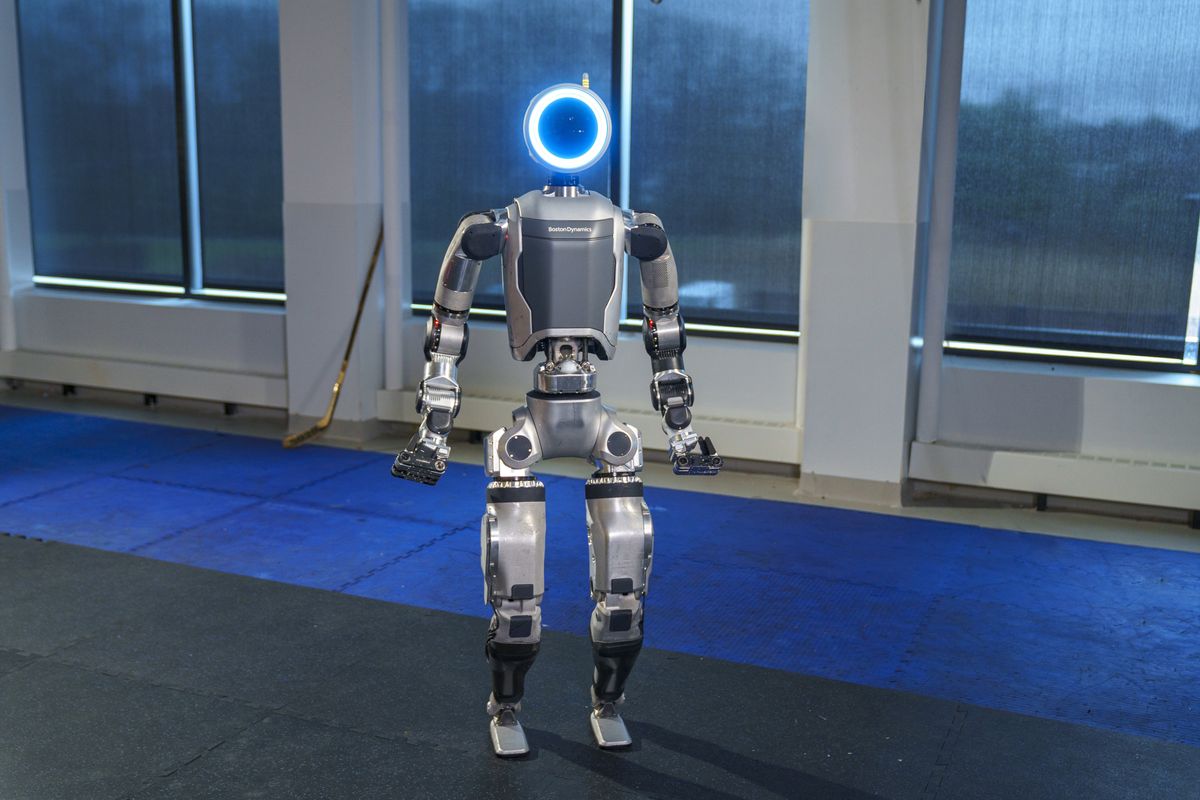
I keep on wondering why robotics researchers persist in designing humanoid robots specifically for domestic applications… Quite often, it seems to because they figure if the robot looks like a person, then it’ll be easier for people to relate to it and become comfortable having it in their home.
Such figuring isn’t quite right, and in fact may be entirely wrong, at least according to this 2008 study from the Swiss Federal Institute of Technology and EPFL. Researchers surveyed 240 people at a home and living exhibition in Geneva about their feelings on robots in their lives, and came up with some interesting data, including the above graph which shows pretty explicitly that having domestic robots that look like humans (or even “creatures”) is not a good idea, and is liable to make people uncomfortable.
The location for the survey was chosen because the people attending the exhibition weren’t interested in robots specifically, but rather home technology in general, making them potential early adopters for robots in the home. And since they decided that going to a home and living exhibition was a fun way to spend their time, it’s probably safe to assume that they’d spent some time thinking about what they would and wouldn’t like to get out of a robot. After the jump, more data on what respondents see robots doing for them in the near future.

The researchers point out that tasks involving relationships score far lower than general manual labor replacement, suggesting that people aren’t interested (at this point) in dealing with a robot on any deeper level than as a tool (although that may change with use). Personally, I was rather disappointed to see driving get such a negative response. It makes sense, I suppose, since also getting negative responses were other tasks in which a robot was put in a position where it would have direct control over the safety of a human… But, we waste so much time on driving, and we’re getting so close to having robots be able to do it, that it’s discouraging to see such a negative perception of the concept. I mean, come on, you’d really rather have a robot wash your car than drive you around in it?
You can download the entire paper here; reading it is definitely worth your time. Note that (for me at least) the font associated with the graphs is bugged. By copying and pasting the symbols into a different program, you can read them, but I’d recommend just reading the data summaries in the paper.
Comments (10)
- Add this post to
- Del.icio.us -
- Digg
Comment by Dante
Made Monday, 12 of July , 2010 at 6:30 am
I personally like the design of the Wowwee line, the Roboboa (obivoulsy a robot, but in snake form)
just something about the obivous robotic shape…I don’t know…
Comment by whiskers
Made Monday, 12 of July , 2010 at 8:31 am
So in the second poll the consensus is that a robot should not be replacing another human. Except for the “taking care of me when I’m old” and “giving me a massage”. Hmm.
Comment by Joey1058
Made Monday, 12 of July , 2010 at 11:45 am
Considering the study was in 08, it might be prudent to do another one. Very few had any concept of social media in 08, even though the iPhone had established itself as an ideal platform. And now not many people can live without social. And robotic cars can definitely free people up for social media.
Comment by Robotbling
Made Monday, 12 of July , 2010 at 9:06 pm
The survey is too vague. Humanoid robots come in a variety of styles, from very realistic to abstract. I can see some people not wanting a robot with features that are “too human”, like the Geminoids, while not having a problem with something that looks like QRIO or NAO, for example.
The second survey shows that people want a robot to do many tasks that are suited to either (1) an army of specialized robots or (2) a single humanoid robot. I can’t imagine they would want to have a dozens of different robots in their home.
Comment by Evan Ackerman
Made Monday, 12 of July , 2010 at 11:24 pm
I guess I should clarify that in the context of this article, when I say “humanoid” I’m talking about the “looking like a human” that the respondents to the survey were probably picturing. So, a robot like the PR2 wouldn’t trigger that “human-like” feeling, even though it has two arms and (sort of) a head. According to the survey, people feel more comfortable with a robot that looks like a robot, as opposed to a robot that’s trying to look “human-y.” A lot of robotics researchers seem to fall into that trap, thinking that since we’re humans, we’re most comfortable around things like us. But even if you totally ignore the uncanny valley, we’re just not wired that way. If it’s a tool, we want it to look like a tool, not a person.
Comment by Eleanor
Made Thursday, 29 of July , 2010 at 8:03 pm
I think that one of the drivers behind the design of humanoid robots is the expectation, which was identified in this research paper, that robots need to communicate in humanlike ways. This seems to encourage designers to give robots expressive faces that can be very humanlike or more of a mechanical cartoon. Maybe this is because the understanding and production of human language is still pretty hard to do in a robot, so the provision of facial expressions is seen as a way to provide more humanlike communication. Maybe even with more complete language capabilities roboticists will still think expressive faces add value. From a personal perspective I’m really not drawn in by such faces on robots, I find them pretty off-putting, and think that movement and sound (and possibly even light) could be just as effective to provide “machinelike” communicative feedback that is nonetheless understandable to humans.
Comment by Dean Meadows
Made Wednesday, 8 of September , 2010 at 11:23 am
Great article Evan, much thanks. Some interesting comments too. The statistic that intrigues me the most is that the majority of (Swiss) people in the survey did not want a robot that looked like an animal or creature even more so than a humanoid? – and then I read this: http://www.telegraph.co.uk/news/worldnews/europe/switzerland/7394698/Swiss-voters-reject-lawyers-for-animals-in-referendum.html
Cultural & social differences are therefore important variable factors which must be accounted for in any robot related research. Lastly Evan, interactive tools can look however we like them to look and that seems to me to be the problem, robotocists need to ask us what we want rather than keep shoving out the same old stuff. Have’nt they heard of user-centred design. Surely we need modular hybrid robots with multiple uses for individualised needs, you dont after all just use your laptop/mobile for email or exclusively for work!
Comment by North 52
Made Friday, 8 of July , 2011 at 12:13 am
If any of you are not already creeped out by robots, look up “Jules” the coversational robot on You Tube. When he is still bald and living in the U.S. he says to his creators (the Hansons)that he is not looking forward to being packed up and moved to England and that he has grown close to the Hanson family and “loves” them. They tell him that they “love” hime too and that he is like family to them. In my eyes they are creating Human Beings no different than any of you. Most of the people I have told this story to have replied , ” Robots can’t really talk back , that is just a hoax.” I dont think that’s true… they are making millions of dollars from these robots and want to give the consumer what was promised.
Comment by bath remodeling lancaster
Made Monday, 21 of November , 2011 at 9:53 pm
That was clever. I’ll be stopping back.
Comment by department of defense contractor
Made Tuesday, 22 of November , 2011 at 10:04 pm
It is extremely useful for me. Massive thumbs up for this weblog post!